Showing posts with label legislation. Show all posts
Wednesday, January 19, 2011
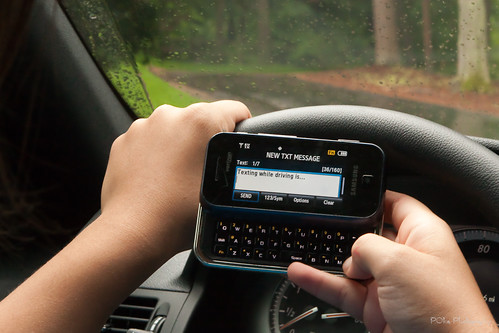
Oklahoma Legislator: Driving while texting kills
State Rep. Danny Morgan held a news conference at the Oklahoma State Capitol today regarding legislation to restrict the use of texting on cell phones while driving in school and construction zones. Morgan was flanked by representatives of AT&T, Oklahoma Safe Kids Coalition, Oklahoma Highway Patrol and Oklahoma AAA among others.
Do you think lawmakers in Oklahoma should ban texting while driving in school and construction zones? Similar legislation has been passed in 30 states. "Let's get on the train," Morgan said. "Texting while driving kills..."
Labels:
legislation,
texting
Rep. Danny Morgan hosts news conference on texting, driving
Morgan Plans to Unveil Legislation to Restrict Texting While Driving at Wednesday Press Conference
Contact: State Rep. Danny Morgan
Capitol: (405) 557-7368
OKLAHOMA CITY – State Rep. Danny Morgan, D-Prague, will hold a press conference at 2 p.m., January 19 in the Governor’s Conference Room, at which time he will unveil legislation to restrict the use of cell phones while driving.
Just last week in Sapulpa drivers on public roads fell again victim to the legal practice of texting while driving, as a 23 year old male let his car cross the northbound lanes and strike head-on a pickup driven by a 27 year old female. The patrolman on the scene estimated they were both driving about 55 miles per hour at the time of the collision.
The male driver informed police he was texting his girlfriend at the time of the accident.
“Texting while driving is not a practice committed only by young drivers, it’s becoming a common occurrence by drivers of all ages, and needs to be nipped in the bud”, stated Rep. Morgan.
The press conference will be attended by numerous organizations and individuals who support increased road safety. They include AAA Oklahoma, Farmers Insurance, Oklahoma Safety Council, Oklahoma State Department of Health, Oklahoma Department of Public Safety, Oklahoma Highway Safety Office, AT&T, and SAFE KIDS Oklahoma State.
Rep. Morgan welcomes all who support efforts to increase safety on our public roads to attend the press conference.
Contact: State Rep. Danny Morgan
Capitol: (405) 557-7368
OKLAHOMA CITY – State Rep. Danny Morgan, D-Prague, will hold a press conference at 2 p.m., January 19 in the Governor’s Conference Room, at which time he will unveil legislation to restrict the use of cell phones while driving.
Just last week in Sapulpa drivers on public roads fell again victim to the legal practice of texting while driving, as a 23 year old male let his car cross the northbound lanes and strike head-on a pickup driven by a 27 year old female. The patrolman on the scene estimated they were both driving about 55 miles per hour at the time of the collision.
The male driver informed police he was texting his girlfriend at the time of the accident.
“Texting while driving is not a practice committed only by young drivers, it’s becoming a common occurrence by drivers of all ages, and needs to be nipped in the bud”, stated Rep. Morgan.
The press conference will be attended by numerous organizations and individuals who support increased road safety. They include AAA Oklahoma, Farmers Insurance, Oklahoma Safety Council, Oklahoma State Department of Health, Oklahoma Department of Public Safety, Oklahoma Highway Safety Office, AT&T, and SAFE KIDS Oklahoma State.
Rep. Morgan welcomes all who support efforts to increase safety on our public roads to attend the press conference.
Labels:
legislation,
texting
Tuesday, January 18, 2011
Tracking 911 hangups
The Monday edition of The Oklahoman featured a front-page story about technology that helps track disconnected 911 calls. Check it out.
Here is an excerpt:
Hanging up on 911 operators is a crime in Oklahoma, and so is interfering with someone else's efforts to make an emergency call. It's a misdemeanor punishable by a fine up to $4,000 and a year in jail.
Labels:
legislation,
news
Thursday, August 26, 2010
FCC Seeks Public Comment on Public Safety Interoperability
Our Nation’s first responders rely on communications systems supplied by a small number of equipment providers to support mission-critical communications. The characteristics of how public safety equipment is developed and provided may impact the interoperability and efficiency of communications between first responders, which could potentially threaten lives and property.
Because of the important role these communications systems play in supporting our Nation’s public safety personnel, it is imperative that we explore all potential barriers to achieving nationwide interoperability for both broadband and narrowband communications, and determine what, if any, actions the Commission should take in this area. In particular, we note the recent letter from the leadership of the U.S. House of Representatives Committee on Energy in Commerce to Chairman Genachowski, seeking information on these issues, including the state of competition in the public safety equipment and device market, the use of proprietary standards by public safety equipment manufacturers, and the impact that these issues may have on public safety interoperability.1 Accordingly, we seek comment on the following:
1. What are the factors that affect the current state of competition in the provision of public safety communications equipment? Are there any additional barriers to additional manufacturers supplying network equipment to the public safety community for narrowband communications? For broadband?
2. How would additional competition in the provision of public safety communications equipment improve narrowband or broadband interoperability? Conversely, what impact does the current state of competition in the provision of public safety communications equipment and devices have on interoperability? Assuming additional competition would benefit public safety interoperability, what actions could the Commission take to improve competition in the provision of public safety communications equipment?
3. What are the limitations of Project 25 in promoting narrowband public safety communications interoperability? What actions, if any, should the Commission take to rectify these limitations?
4. Could open standards for public safety equipment increase competition? What actions could the Commission take to facilitate openness?
5. As the Commission considers requirements for the 700 MHz broadband public safety network, are there any requirements on public safety equipment or network operators that would increase competition in the provision of public safety equipment? How can the Commission’s work on requirements for the 700 MHz broadband public safety network be leveraged to promote interoperability between narrowband and broadband networks?
View the full request for public comment here, including details on how to file comments and obtain responses.
For further information, contact Jennifer A. Manner, Deputy Bureau Chief, Public Safety and Homeland Security Bureau, (202) 418-3619, Jennifer.Manner[at]fcc[dot]gov.
Labels:
legislation
Saturday, July 24, 2010
Justice Department proposes 911 centers take text, video calls from individuals with disabilities
The Justice Department announced yesterday that it will publish four new Americans with Disabilities Act (ADA) proposals addressing the accessibility of websites, the provision of captioning and video description in movies shown in theaters, accessible equipment and furniture, and the ability of 9-1-1 centers to take text and video calls from individuals with disabilities. The proposals are in the form of advance notices of proposed rulemaking, or ANPRMs, which provide information on these ADA issues and ask questions seeking comments and information from the public. The four ANPRMs will be published in the Federal Register on July 26, 2010.
"We are working hard to ensure that the ADA keeps up with technological advances that were unimaginable 20 years ago," said Attorney General Holder. "Just as these quantum leaps can help all of us, they can also set us back - if regulations are not updated or compliance codes become too confusing to implement. To avoid this, the Department will soon publish four advanced notices of proposed rulemaking regarding accessibility requirements for websites, movies, equipment and furniture, and 9-1-1 call-taking technologies."
Web Accessibility
State and local governments, businesses, educators, and other organizations covered by the ADA are increasingly using the web to provide information, goods, and services to the public. In the web accessibility ANPRM, the department presents for public comment a series of questions seeking input regarding how the department can develop a workable framework for website access that provides individuals with disabilities access to the critical information, programs, and services provided on the web, while respecting the unique characteristics of the Internet and its transformative impact on everyday life.
Next Generation (NG) 9-1-1
9-1-1 centers are moving towards an Internet-enabled network to allow the general public to make a 9-1-1 "call" via voice, text, or video over the Internet and directly communicate with personnel at the centers. The NG 9-1-1 ANPRM seeks information on how the centers may be able to provide direct access to 9-1-1 for individuals with disabilities as they implement new communication technologies.
Captioning and Video Description in Movies Shown in Movie Theaters
Recent technologies have been developed to provide closed captions and video description in movies being shown at movie theaters. Movie studios have begun to produce and distribute movies with captioning and video description. However, these features are not generally made available at movie theaters. In the captioning and video description ANPRM, the department asks for suggestions regarding the kind of accessibility requirements for captioning and video description it should consider as proposed rules for public comments, particularly in light of the industry's conversion to digital technology.
Equipment and Furniture
Full use of the nation's built environment can only be fully achieved by the use of accessible equipment. There is now improved availability of many different types of accessible equipment and furniture, ranging from accessible medical exam tables, chairs, scales, and radiological equipment and furniture to "talking" ATMs and interactive kiosks. In the equipment and furniture ANPRM, the department poses questions and seeks comments from the public, covered entities, equipment manufacturers, advocacy and trade groups about the nature of accessibility issues and proposed solutions for making equipment and furniture accessible to persons with disabilities.
The four ANPRMs will be available for review today at 3:00 P.M. EDT at http://ada.gov/anprm2010.htm.
Source: U.S. Department of Justice
CONTACT: U.S. Department of Justice Office of Public Affairs
+1-202-514-2007, TDD +1-202-514-1888
Web Site: http://www.justice.gov/

"We are working hard to ensure that the ADA keeps up with technological advances that were unimaginable 20 years ago," said Attorney General Holder. "Just as these quantum leaps can help all of us, they can also set us back - if regulations are not updated or compliance codes become too confusing to implement. To avoid this, the Department will soon publish four advanced notices of proposed rulemaking regarding accessibility requirements for websites, movies, equipment and furniture, and 9-1-1 call-taking technologies."
Web Accessibility
State and local governments, businesses, educators, and other organizations covered by the ADA are increasingly using the web to provide information, goods, and services to the public. In the web accessibility ANPRM, the department presents for public comment a series of questions seeking input regarding how the department can develop a workable framework for website access that provides individuals with disabilities access to the critical information, programs, and services provided on the web, while respecting the unique characteristics of the Internet and its transformative impact on everyday life.
Next Generation (NG) 9-1-1
9-1-1 centers are moving towards an Internet-enabled network to allow the general public to make a 9-1-1 "call" via voice, text, or video over the Internet and directly communicate with personnel at the centers. The NG 9-1-1 ANPRM seeks information on how the centers may be able to provide direct access to 9-1-1 for individuals with disabilities as they implement new communication technologies.
Captioning and Video Description in Movies Shown in Movie Theaters
Recent technologies have been developed to provide closed captions and video description in movies being shown at movie theaters. Movie studios have begun to produce and distribute movies with captioning and video description. However, these features are not generally made available at movie theaters. In the captioning and video description ANPRM, the department asks for suggestions regarding the kind of accessibility requirements for captioning and video description it should consider as proposed rules for public comments, particularly in light of the industry's conversion to digital technology.
Equipment and Furniture
Full use of the nation's built environment can only be fully achieved by the use of accessible equipment. There is now improved availability of many different types of accessible equipment and furniture, ranging from accessible medical exam tables, chairs, scales, and radiological equipment and furniture to "talking" ATMs and interactive kiosks. In the equipment and furniture ANPRM, the department poses questions and seeks comments from the public, covered entities, equipment manufacturers, advocacy and trade groups about the nature of accessibility issues and proposed solutions for making equipment and furniture accessible to persons with disabilities.
The four ANPRMs will be available for review today at 3:00 P.M. EDT at http://ada.gov/anprm2010.htm.
Source: U.S. Department of Justice
CONTACT: U.S. Department of Justice Office of Public Affairs
+1-202-514-2007, TDD +1-202-514-1888
Web Site: http://www.justice.gov/
Labels:
ADA,
legislation,
NG 9-1-1,
policy
Monday, July 12, 2010
Metro Fire Chiefs show support for Broadband for First Responders Act
The Central Oklahoma Metro Fire Chiefs Association voted unanimously last week to ask Oklahoma Congressman Tom Cole to cosponsor H.R. 5081, the Broadband for First Responders Act. This bill will ensure that public safety organizations have the necessary spectrum to develop a nationwide interoperable public safety wireless broadband network that will be necessary to implement Next Generation 9-1-1 technology.
Click here for more details.
Photo Credit: Yougottalove via istockphoto.com with purchase.
Click here for more details.
Photo Credit: Yougottalove via istockphoto.com with purchase.
Labels:
broadband,
legislation
Tuesday, May 11, 2010
Governor signs bill banning cell phone use by transit drivers
In September 2008, a commuter train in Los Angeles crashed head on with a freight train, killing 25 people. Phone records later revealed that the engineer had been sending and receiving text messages when the crash occured.
In May 2002, a coal train engineer failed to stop his train before it ran onto another track colliding head on with an intermodal train. The engineer of the intermodal train was killed. The coal train engineer had been talking on his cell phone.
In November 2004, a bus driver hit a 10-foot high bridge with his 12-foot high bus. Eleven students were injured, one of them seriously. The driver was talking on a hands-free cell phone.
In May 2009, 49 trolley passengers were injured when a trolley operator in Boston ran a red light and hit another trolley. He had been text messaging.
OKLAHOMA CITY – Under legislation recently signed into law, public transit drivers could face a misdemeanor charge and fine of $500 for using a cell phone on their routes.
State Rep. Harold Wright, the author of House Bill 2957, said his bill addresses the many dangerous uses of a cell phone while driving.
“There was concern about the use of cell phones by drivers even before the many features that exist today were added,” Wright, R-Weatherford, said. “Drivers can now become distracted while texting, searching the Internet, e-mailing, and using a number of other new features. Traffic collisions are one of the major causes of death in the United States, and public transit drivers hold too many lives in their hands to be focusing their attention on anything other than their jobs.”
Wright said school bus drivers are included in the definition of public transit driver.
“We want to know that our children will be safe on their way to and from school and at any other time they will be riding a school bus,” Wright said. “I also think a fine of $500 is an appropriate penalty. It is large enough to be a serious deterrent.”
Wright said that the bill complements House Bill 2276, another piece of legislation signed into law in April that will allow law enforcement to cite drivers who drive dangerously while using their cell phone, but prohibit them from initiating a traffic stop simply because a driver is also operating a cell phone.
“The roads are going to be a little safer in November, when these two laws take effects,” Wright said. “I believe this session has been very productive when it comes to driver safety laws.”
House Bill 2957 was signed into law May 6, 2010. It will go into effect on November 1, 2010.
Photo Credit: Poko0059 with permission via Creative Commons
In May 2002, a coal train engineer failed to stop his train before it ran onto another track colliding head on with an intermodal train. The engineer of the intermodal train was killed. The coal train engineer had been talking on his cell phone.
In November 2004, a bus driver hit a 10-foot high bridge with his 12-foot high bus. Eleven students were injured, one of them seriously. The driver was talking on a hands-free cell phone.
In May 2009, 49 trolley passengers were injured when a trolley operator in Boston ran a red light and hit another trolley. He had been text messaging.
OKLAHOMA CITY – Under legislation recently signed into law, public transit drivers could face a misdemeanor charge and fine of $500 for using a cell phone on their routes.
State Rep. Harold Wright, the author of House Bill 2957, said his bill addresses the many dangerous uses of a cell phone while driving.
“There was concern about the use of cell phones by drivers even before the many features that exist today were added,” Wright, R-Weatherford, said. “Drivers can now become distracted while texting, searching the Internet, e-mailing, and using a number of other new features. Traffic collisions are one of the major causes of death in the United States, and public transit drivers hold too many lives in their hands to be focusing their attention on anything other than their jobs.”
Wright said school bus drivers are included in the definition of public transit driver.
“We want to know that our children will be safe on their way to and from school and at any other time they will be riding a school bus,” Wright said. “I also think a fine of $500 is an appropriate penalty. It is large enough to be a serious deterrent.”
Wright said that the bill complements House Bill 2276, another piece of legislation signed into law in April that will allow law enforcement to cite drivers who drive dangerously while using their cell phone, but prohibit them from initiating a traffic stop simply because a driver is also operating a cell phone.
“The roads are going to be a little safer in November, when these two laws take effects,” Wright said. “I believe this session has been very productive when it comes to driver safety laws.”
House Bill 2957 was signed into law May 6, 2010. It will go into effect on November 1, 2010.
Photo Credit: Poko0059 with permission via Creative Commons
Labels:
legislation
Friday, May 7, 2010
Governor Involved in 9-1-1 Chase: Henry Signs HB 2556
Oklahoma Governor Brad Henry signed House Bill 2556 earlier this week. This legislation ensures that all cell phones are assessed the 50-cent service fee voted by the citizens of Central Oklahoma in 2005. Currently only some of wireless carriers in Central Oklahoma remit this fee that funds the complex state of the art 9-1-1 system that locates both traditional landline and cell phone users when they call 9-1-1.
The challenge for that selling prepaid cell service is that the service is often sold in bulk to retailers and it is unclear where the service is used or purchased. House Bill 2556 will use an innovative way of assessing the public safety fee by charging it at the retail transaction, since the address of the user is unknown. 9-1-1 ACOG believes this methodology for 9-1-1 fees may be the future to funding 9-1-1. 9-1-1 has always chased technology in both locating the caller but also in fee remittance which pays for the service. Customers demand more innovate and mobile technology and the traditional way of putting the fee on a phone bill is becoming obsolete.
Summary of HB 2556
Visit the Association of Central Oklahoma Government's Web site.
Tuesday, April 27, 2010
Oklahoma House of Representatives approves HB 2556
The State House of Representatives approved Senate amendments to House Bill 2556 this morning. HB 2556 is collaborative legislation from public safety and the wireless industry utilizing a model developed by the National Conference of State Legislators. This legislation changes remittance of 9-1-1 service fees for pre-paid wireless telephones to retailers who collect the service fee at the point of sale. Retailers will remit the 50-cent service fee to the Oklahoma Tax Commission who will distribute to the 9-1-1 entities in the state based upon population.
“This legislation is important for long-term financial sustainability of
9-1-1 systems in the state.” said Rep. Steve Martin. Prepaid cell phones make up 20% of wireless market, and this group is expected to continue to grow by 10-15% each year in the future according to the Cellular Telephone Industry Association.
HB 2556 would become effective January 1, 2011 if signed by Governor Henry. 9-1-1 ACOG encourages our public safety partners to contact the Governor’s Office to ensure his support.
Photo: Oklahoma State Rep. Steve Martin (R-Bartlesville)
“This legislation is important for long-term financial sustainability of
9-1-1 systems in the state.” said Rep. Steve Martin. Prepaid cell phones make up 20% of wireless market, and this group is expected to continue to grow by 10-15% each year in the future according to the Cellular Telephone Industry Association.
HB 2556 would become effective January 1, 2011 if signed by Governor Henry. 9-1-1 ACOG encourages our public safety partners to contact the Governor’s Office to ensure his support.
Photo: Oklahoma State Rep. Steve Martin (R-Bartlesville)
Friday, April 16, 2010
U.S. Senate Recognizes April as 9-1-1 Education Month
On April 14, the Senate passed S. Res. 482 recognizing April 2010 as "National 9-1-1 Education Month." The measure was co-sponsored by the E9-1-1 Caucus Co-Chairs Senator Amy Klobuchar (D-MN) and Senator Richard Burr (R-NC).
Labels:
legislation
Monday, April 12, 2010
Media appreciation for help with 9-1-1 issues and awareness
This is an important week for 9-1-1 ACOG (Association of Central Oklahoma Governments). Today, the organization will honor the dispatcher of the year, a communications officer from Nichols Hills Police Department, and on Wednesday, they will be among those agencies celebrating 9-1-1 Day at the Oklahoma State Capitol.
Pictured Left: Goodies for our friends in the media, who help bring so much awareness to
9-1-1 issues.
Pictured Left: Goodies for our friends in the media, who help bring so much awareness to
9-1-1 issues.
Labels:
Dispatchers,
legislation,
Media,
Nichols Hills,
Oklanena
Thursday, April 8, 2010
HB 2556 passes 41-4
HB 2556, the prepaid wireless 9-1-1 bill, passed the Oklahoma Senate yesterday 41-4.
Labels:
legislation
Subscribe to:
Posts (Atom)